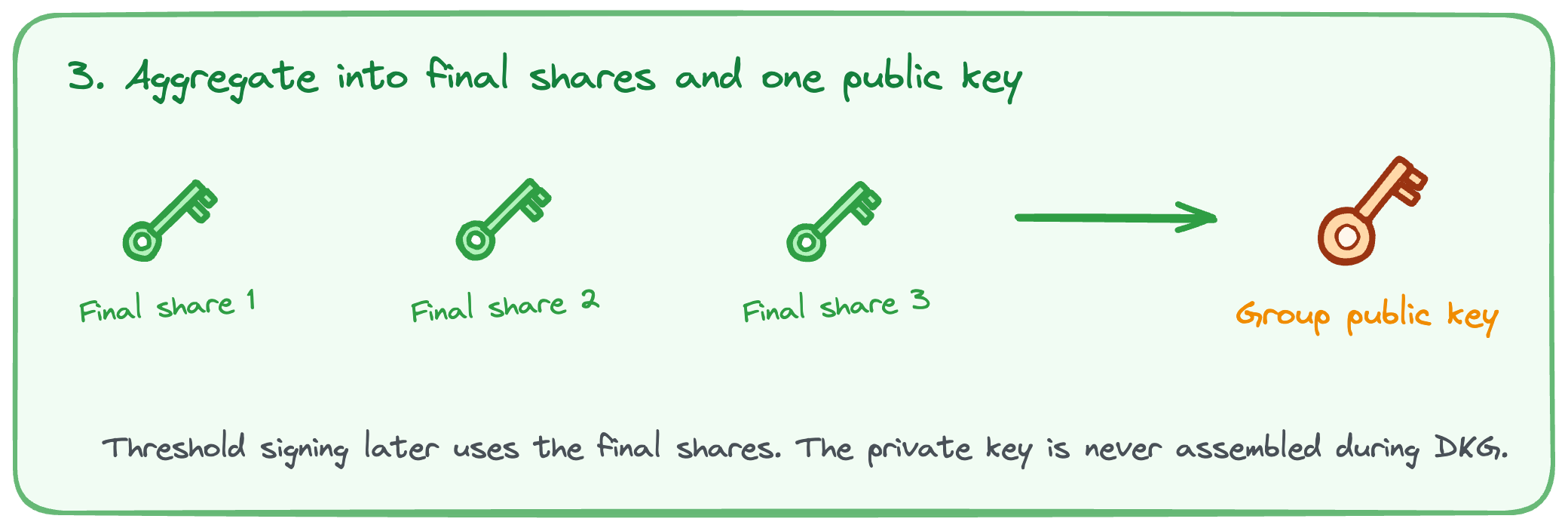
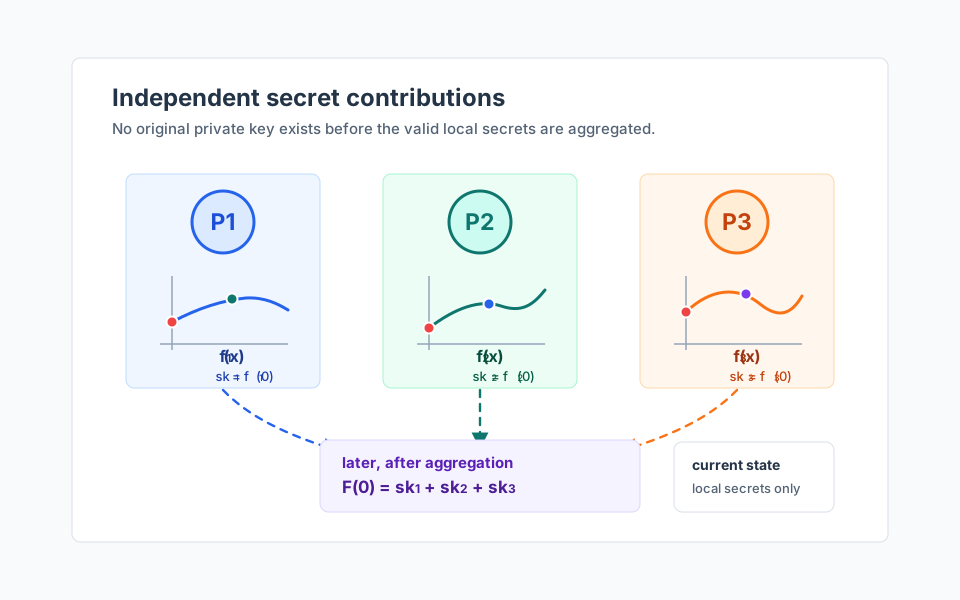
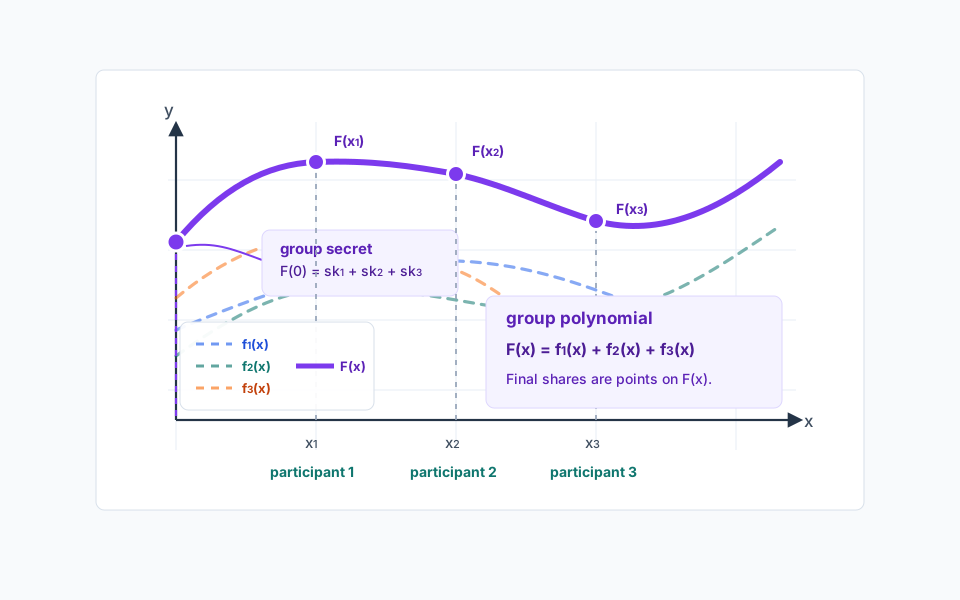
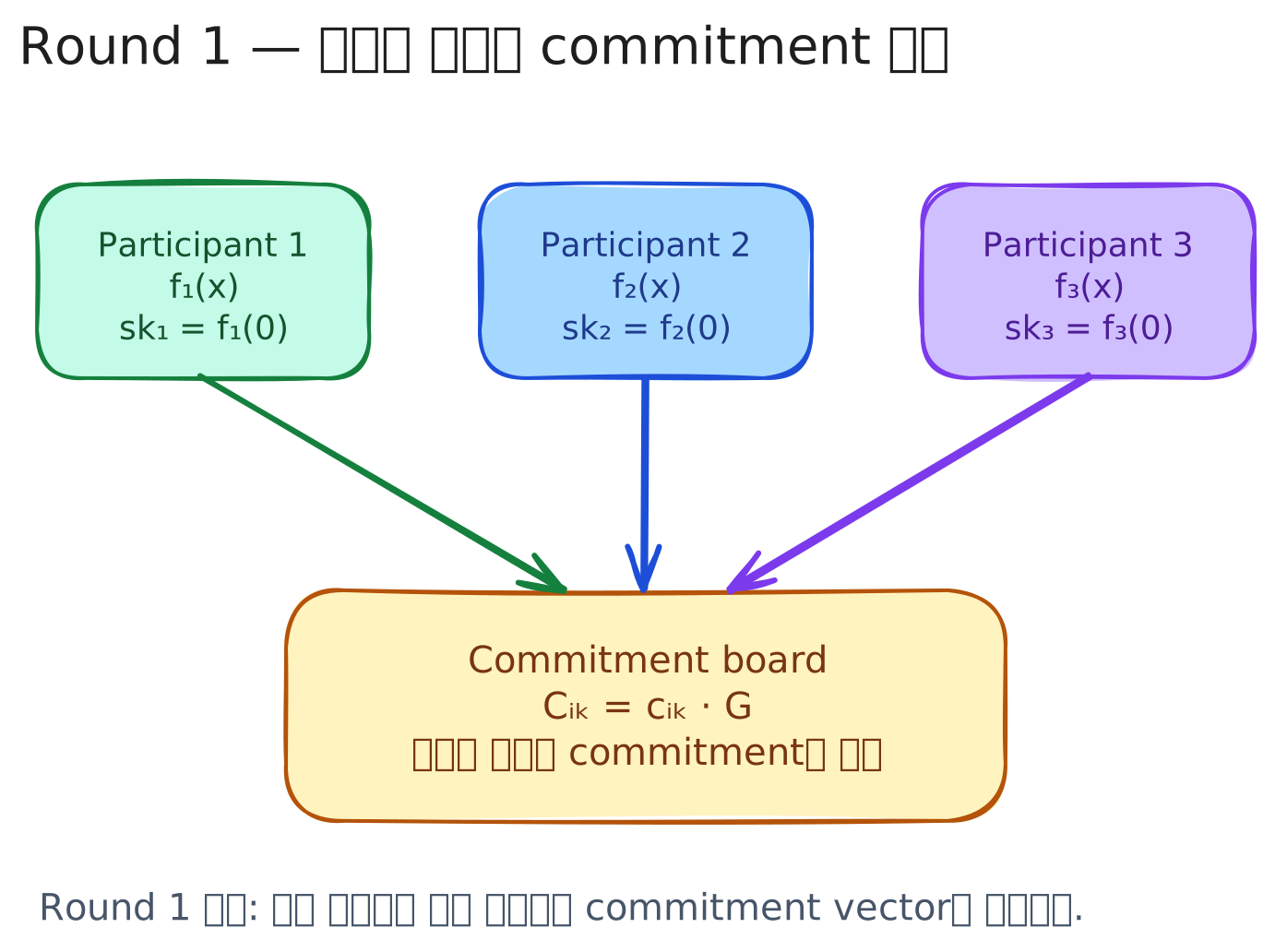
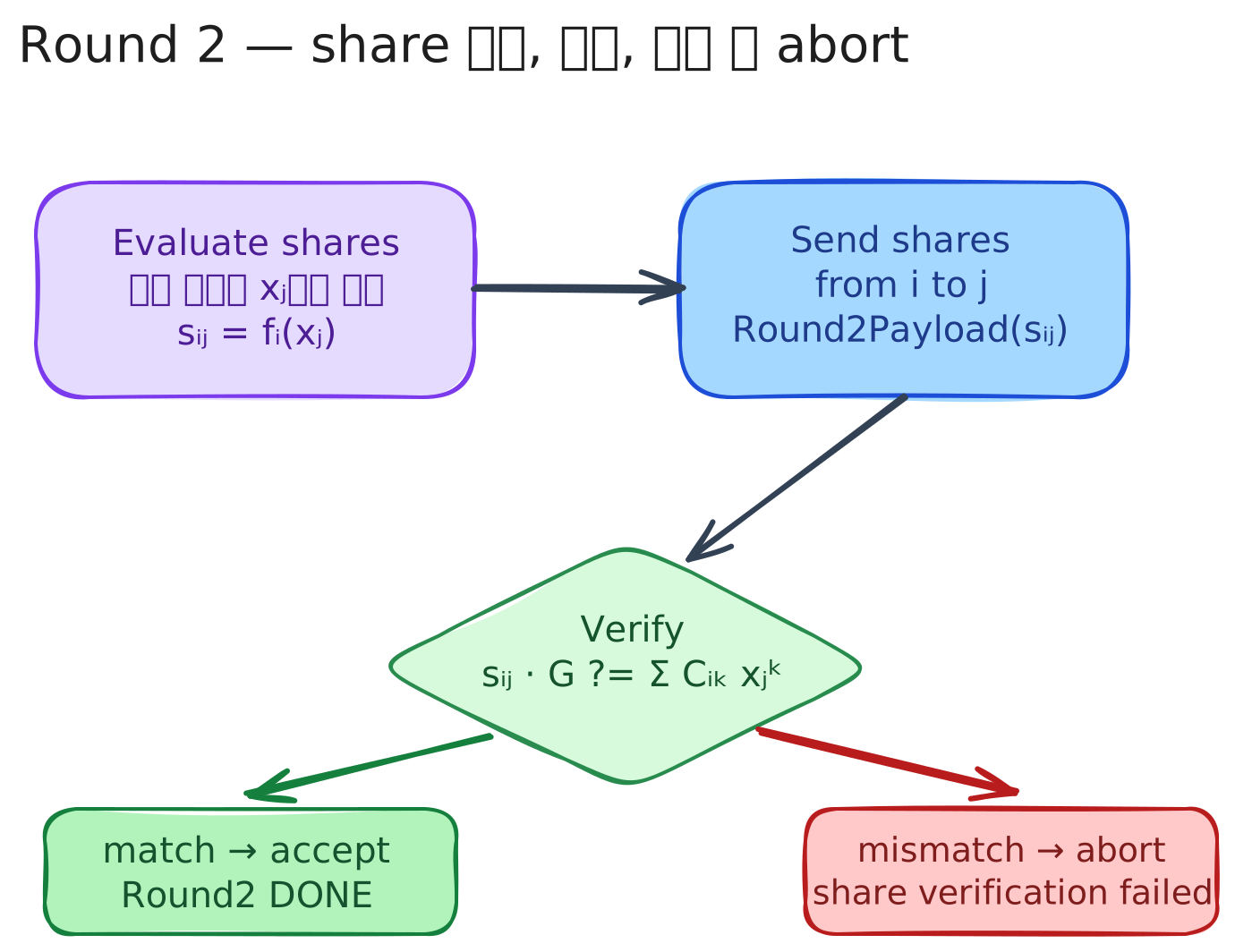
Visual materials used in Pedersen DKG란?. These diagrams show how each participant creates a local polynomial, broadcasts coefficient commitments, exchanges and verifies shares, then aggregates final shares and a group public key.
- Source Markdown
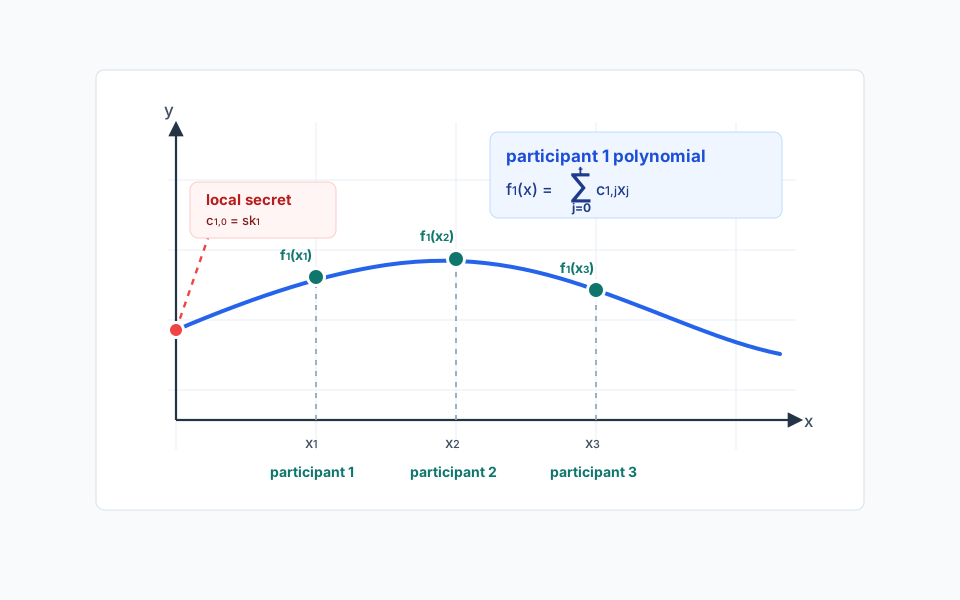
- Participant 1 polynomial SVG
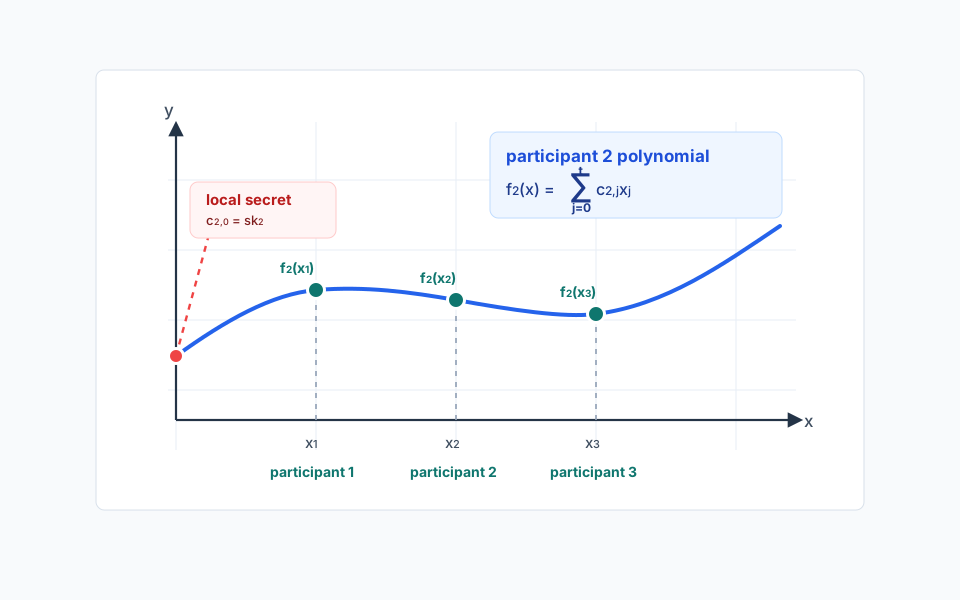
- Participant 2 polynomial SVG
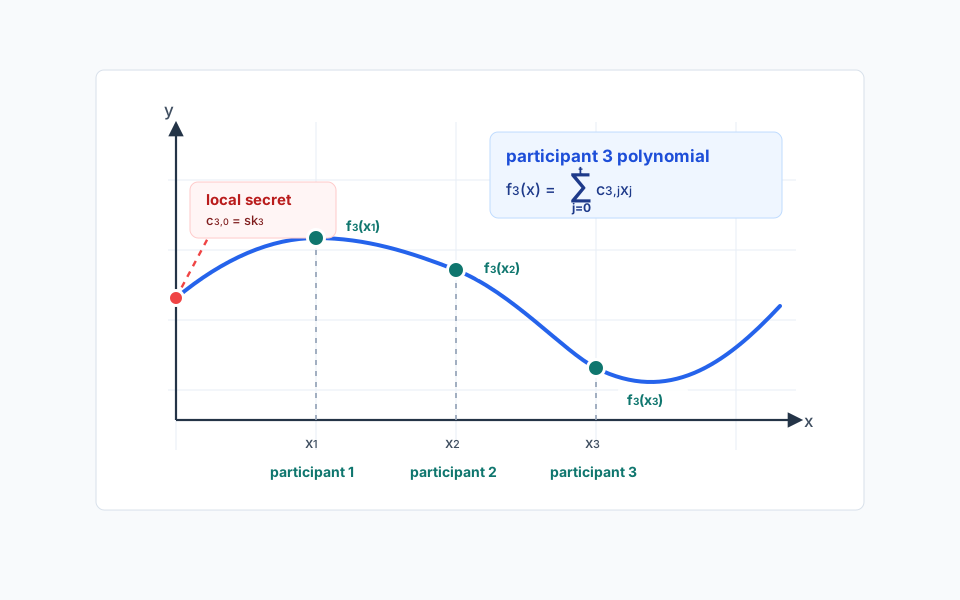
- Participant 3 polynomial SVG
- Local contribution SVG
- Group polynomial SVG
- Round 1 commitment SVG
- Round 2 share exchange PNG
- Round 2 share verification SVG
- Final shares PNG
Polynomial Form
When the threshold is t, each participant i samples a degree t - 1 polynomial:
The constant term is that participant’s local secret contribution:
For three participants:
Local Polynomial Shares
Participant 1
Participant 2
Participant 3
Local Contributions
Group Polynomial
Round 1 Commitments
Round 2 Share Exchange
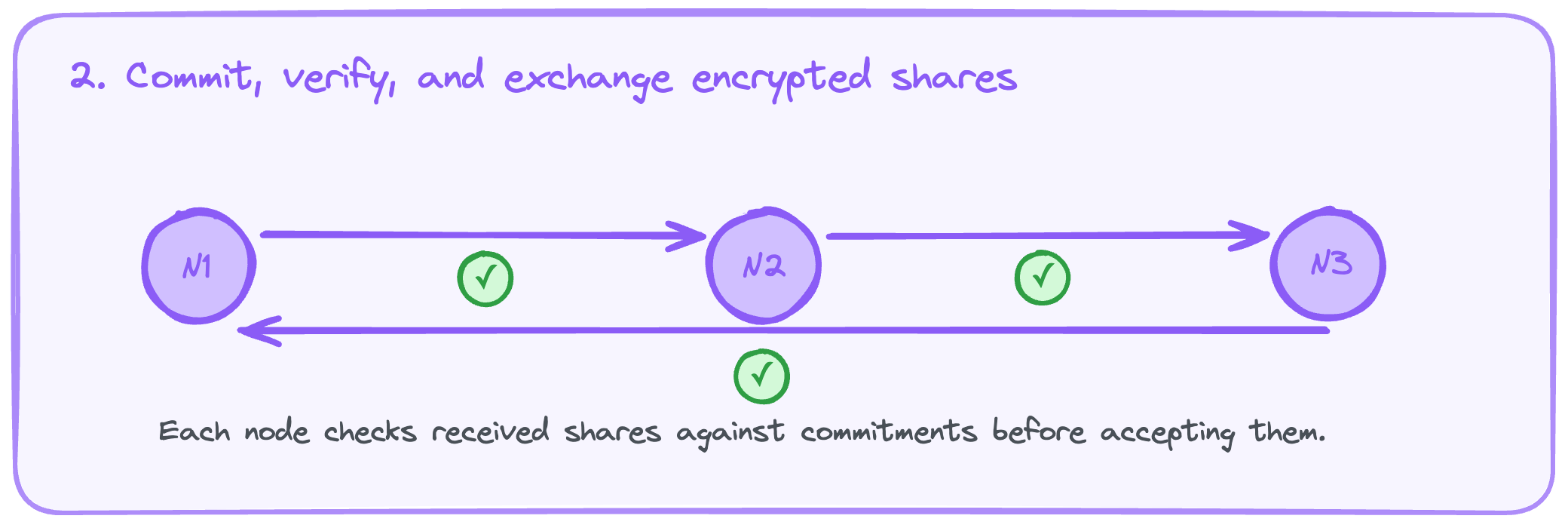
Round 2 Share Verification
Final Shares